English:
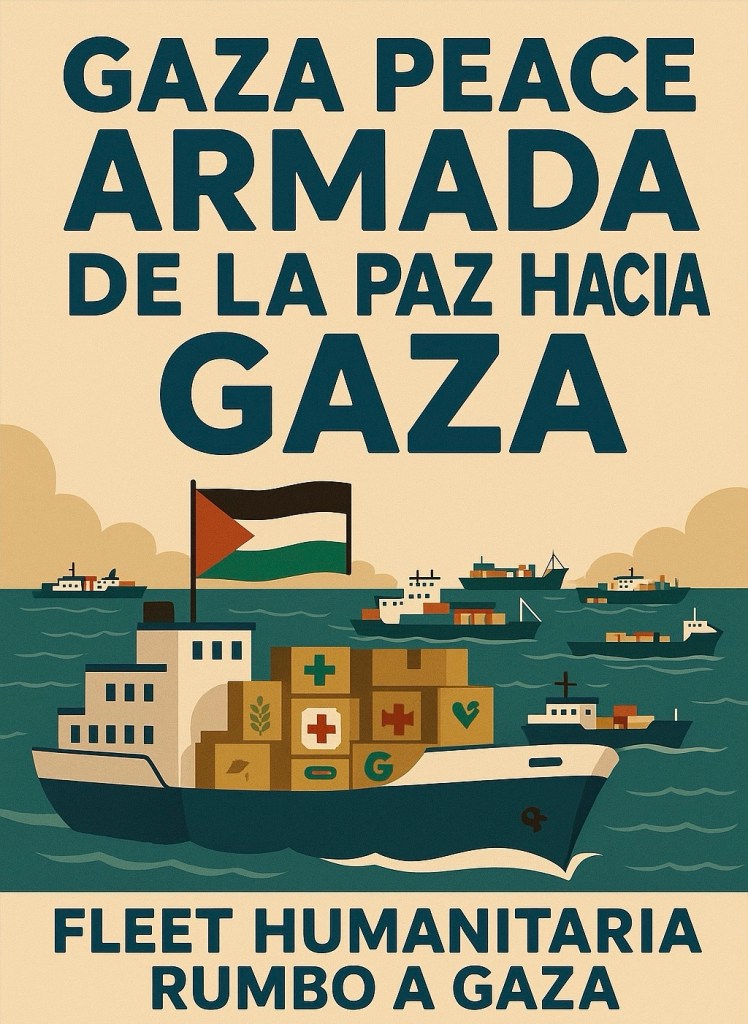
From Spain, three ships departed to join the mission. Italy sent 18 vessels from Sicily. Added to the ships that had already staged in Tunisia, the flotilla now counts over 50 ships in total, making this the largest humanitarian flotilla yet attempting to break the Gaza blockade.
Some of the earliest boats had moved ahead and staged in Tunisian ports, preparing for regrouping.
The big development: Tunisia has officially condemned the fires on two of the flotilla’s ships as “premeditated assaults.”
This is not only an attack on humanitarian activists — it is now recognized as an assault on a sovereign nation’s own harbor.
Internationally, momentum is also building: the Pakistani government, together with 15 other nations, issued a joint statement calling for respect for international law in relation to the flotilla — demanding no unlawful or violent acts against it and insisting on accountability if such acts occur.
And in a surprise addition, Indonesia has contributed five ships, backed by the full support of its government. This brings not only more vessels but also strong Asian representation to what is increasingly a global effort.
That acknowledgment and support changes the narrative: what activists first reported as drone strikes, often dismissed, now has the weight of both a sovereign government and a bloc of nations confirming the seriousness of these attacks.
The flotilla sails on, and with each departure, its momentum — and international attention — grows.
Español:
Desde España, tres barcos partieron para unirse a la misión. Italia envió 18 embarcaciones desde Sicilia. Sumados a los barcos que ya se habían adelantado y concentrado en Túnez, la flotilla cuenta ahora con más de 50 barcos en total, convirtiéndose en la mayor flotilla humanitaria que ha intentado romper el bloqueo de Gaza.
Algunas de las primeras embarcaciones se habían adelantado y estacionado en puertos tunecinos, preparándose para reagruparse.
El gran acontecimiento: Túnez ha condenado oficialmente los incendios en dos de los barcos de la flotilla como “ataques premeditados.”
Esto no es solo un ataque contra activistas humanitarios — ahora se reconoce como un ataque a un puerto de una nación soberana.
A nivel internacional, también crece el impulso: el gobierno de Pakistán, junto con otros 15 países, emitió una declaración conjunta pidiendo respeto al derecho internacional en relación con la flotilla — exigiendo que no haya actos ilegales ni violentos contra ella e insistiendo en la responsabilidad si tales actos se producen.
Y en una adición sorprendente, Indonesia ha aportado cinco barcos, con el pleno apoyo de su gobierno. Esto no solo suma más embarcaciones, sino también una fuerte representación asiática a lo que cada vez más se perfila como un esfuerzo global.
Ese reconocimiento y apoyo cambian la narrativa: lo que los activistas denunciaron al principio como ataques con drones, a menudo descartado, ahora cuenta con el peso de un gobierno soberano y de un bloque de países que confirman la gravedad de estos ataques.
La flotilla sigue navegando, y con cada partida, crece su impulso — y la atención internacional.
 Oddly Robbie
Leave a comment