By Oddly Robbie
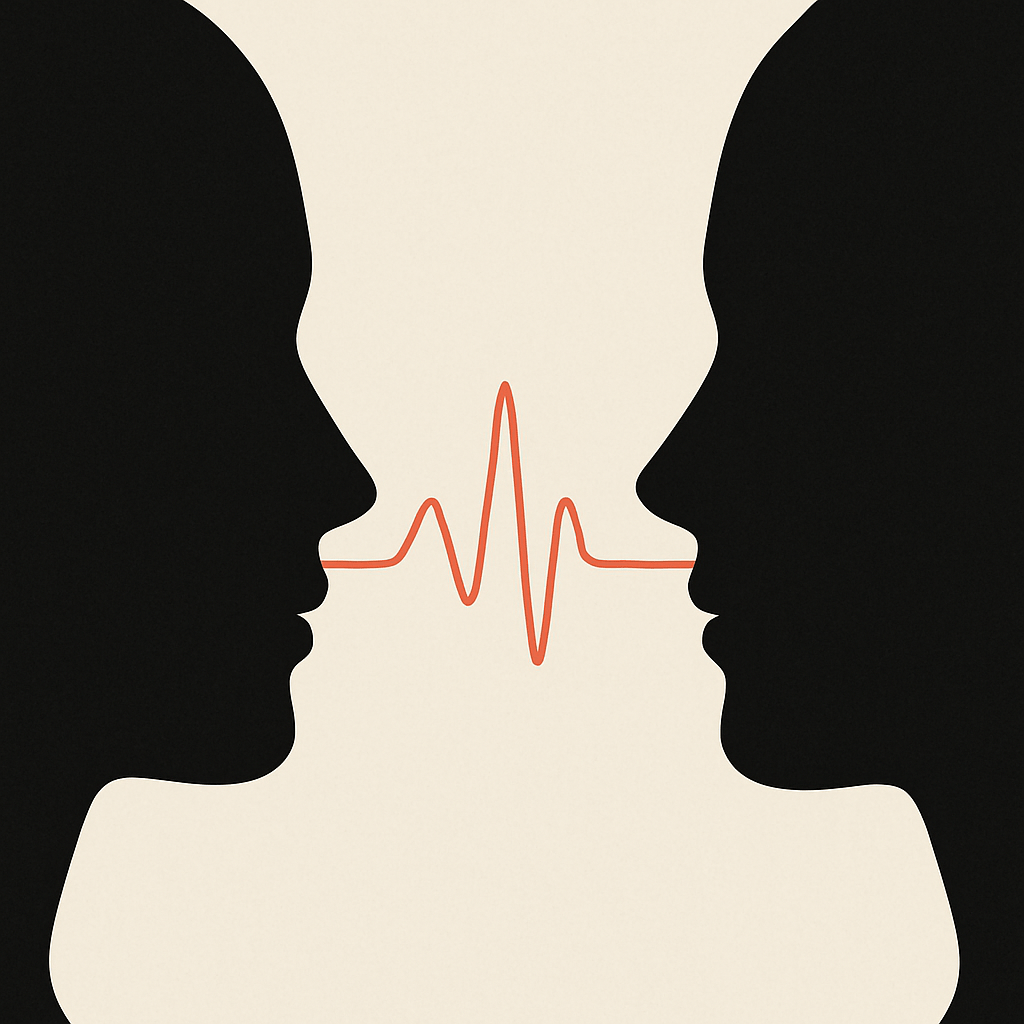
It’s not me.
It’s not you.
It’s too much for us both.
There’s a kind of connection some people only feel once or twice in their lives—
maybe in a first kiss,
a perfect choir moment,
or a flash of chemistry that’s impossible to explain.
For me, it can happen in seconds.
And that’s where things get complicated.
⸻
The Science Behind Why Some of Us Sync So Fast
There’s a real neurological phenomenon called interpersonal synchrony.
Researchers study how two people’s bodies begin to mirror each other:
• heart rate
• breathing rhythm
• micro-expressions
• pupil dilation
• nervous system arousal
• subtle body sway
• vocal tone and timing
Neurotypical people need prolonged eye contact, trust, or emotional intimacy before this happens.
Musicians, dancers, and elite sports teams train for years to reach this level of “shared rhythm.”
But autistic people with high attunement — people like me — can reach this state incredibly fast.
We have nervous systems that are highly sensitive to micro-signals.
It’s not magic.
It’s not romance.
It’s a form of accelerated neural coupling.
Some scientists link this to:
• polyvagal theory (our social nervous system seeking safety signals)
• enhanced sensory processing (detecting micro-details others miss)
• hyper-synchronization patterns in autistic cognition
• mirror neuron sensitivity (debated but still useful descriptively)
Put together, it means one thing:
I can “sync” with someone before either of us understands what’s happening.
⸻
Why This Feels Different for Both People
For the other person, this sudden resonance can feel electric—
sometimes more powerful than falling in love.
Because for them, this level of synchrony is supposed to be rare.
It only happens during major emotional moments, so their brain interprets:
“This is special.
This means something.”
But for me, it’s simply how my wiring works.
And that mismatch creates confusion on both sides.
⸻
The Emotional Cost
When I attune to someone:
• they stay in my mind for days
• my system needs time to “de-sync”
• I carry a little piece of the interaction
• it drains my energy like a battery left running
Meanwhile the other person is often left wondering:
“Why did that feel so intense?”
“Why can’t I stop thinking about this?”
“What just happened?”
Neither of us is at fault.
Our nervous systems just don’t meet in the same place at the same speed.
⸻
Why I Protect Myself
Dark glasses help.
Shorter conversations help.
Avoiding unnecessary physical touch helps.
It’s not distance.
It’s self-regulation.
Because if I let the full synchrony happen freely:
• the other person may read it as romantic interest
• I may attach deeper than intended
• the experience may overwhelm us both
• casual encounters will never be “casual”
This is why I set boundaries that look strict but are actually compassionate.
⸻
The Truth I Live By
Some of us don’t fall in love.
We fall into rhythm.
And for someone like me, that rhythm is powerful, immediate, and unforgettable—
for better and for worse.
So I return to these words, simple and honest:
It’s not me.
It’s not you.
It’s too much for us both.
⸻
 Oddly Robbie
Leave a comment