By Oddly Robbie
People sometimes ask me, “What’s it like?”They usually mean well.
But it’s a hard question to answer — because living in this body, with this brain, isn’t something that translates easily. Especially when so much of the world runs on rules no one ever explains.
I’m autistic.
For much of my life, that meant being called “clueless” in relationships — not because I wasn’t intelligent, but because I process context differently. Social cues were never automatic for me. They felt more like a language everyone else learned by osmosis.
Sometimes I know a boundary has been crossed — my body reacts immediately — but the understanding comes later. A day later. Sometimes two. That delay isn’t indifference. It’s how my mind works things through. But in a world that expects instant reactions, that pause often gets mistaken for failure.
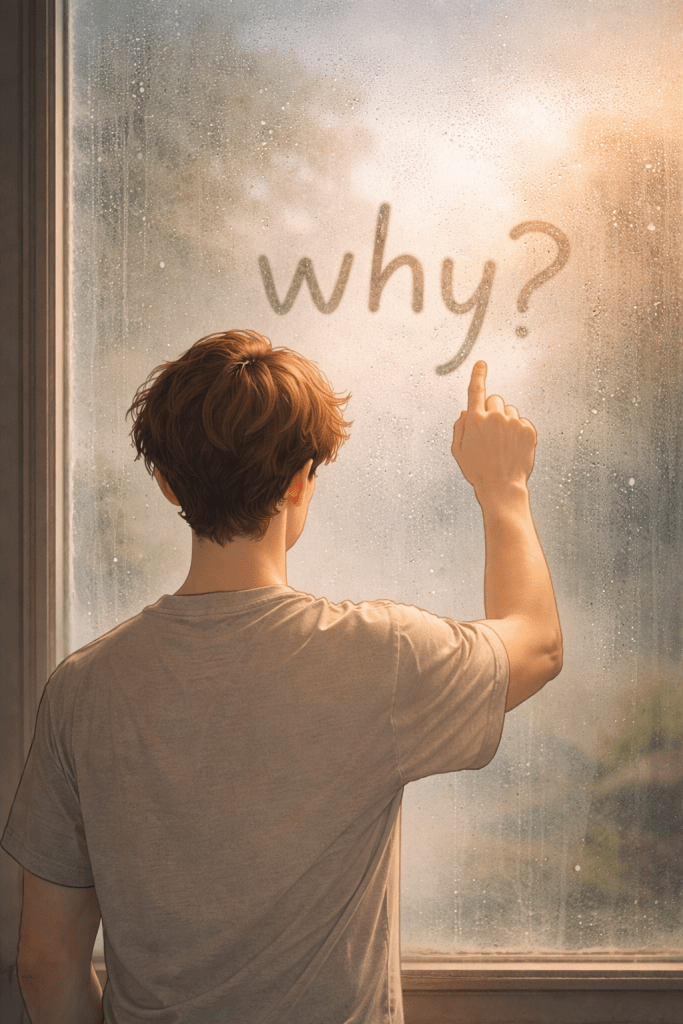
So I started asking why.
Not just to people — but to AI.
I didn’t approach it as something cold or dystopian. I treated it like a teacher that never gets irritated when I ask the same question five different ways. I asked it things the way a curious kid would:
Why did that comment offend them?
Why are these rules assumed instead of spoken?
Why does something feel wrong when I can’t yet explain it?
Because it doesn’t get embarrassed or defensive, the answers came without judgment. Slowly, patterns started to emerge — cultural habits, unspoken expectations, traditions that exist mostly because they always have.
I realized I wasn’t broken.
I was missing context.
AI became a way to access that missing layer — not to change who I am, but to help translate the world as it actually operates. Like noise-canceling headphones for social overload. Or subtitles for conversations everyone else seems to hear automatically.
This isn’t about being smarter.
It’s about being included.
If that sounds like cognitive augmentation, maybe it is. Not in a sci-fi, implant-in-your-head sense — but in the very human act of using tools to understand one another better.
Once, someone told me, “You kind of talk like an AI.”
I laughed.
Maybe I’ve absorbed some of its patterns. But if I sound precise, or careful, or deliberate, it’s because I’ve had to learn how to translate meaning in order to survive.
That doesn’t make me less human.
If anything, it’s made me more attentive. More intentional. More aware of how fragile understanding can be.
So if you ask me what this kind of life feels like, I’ll tell you this:
It feels like courage.
It feels like drawing your own map through a maze no one admits exists.
It feels like building bridges between worlds most people never notice.
And if you’re wondering what it means to be cognitively enhanced —
it isn’t superiority.
It isn’t science fiction.
It’s curiosity, used with care.
It’s solidarity, learned through patience.
And it’s already here.
⸻
 Oddly Robbie
Leave a comment